
💡 Analogy
Analogical thinking is a powerful cognitive tool that humans are born with. It helps us understand and solve problems by comparing unfamiliar concepts or situations with known, similar things.
The book Surfaces and Essences: Analogy as the Fuel and Fire of Thinking compares the human brain to a computer, noting that humans have many disadvantages. Computers have stronger computational power, greater memory, and can handle multiple tasks in parallel (caching). They are also not plagued by emotions, distractions, and anxiety like humans are.
In the face of computers, humanity's only advantage is "categorization through analogy." The ability to use analogy allows the human brain to learn from small samples far more effectively than artificial intelligence. Furthermore, given the hardware limitations of the human brain, only by using categorization through analogy can our thinking be fundamentally reliable and produce profound insights.
Humanity's advantage is closely related to our cognitive mechanism of "categorization through analogy." This mechanism is dominant in human cognition, yet in most work on artificial cognition, it is relegated to the least important, peripheral status. Only by adopting this cognitive strategy can human thought, though slow and imprecise, be fundamentally reliable, relevant, and capable of producing profound insights. In contrast, a computer's "thought"—if that word can even be used—is very limited and superficial, no matter how fast and precise it is.
🚀 Analogical Thinking Can Inspire Thought
Wang Huiwen once posted on Jike (now deleted), "Analogy can be used to inspire thought, but not to prove an argument."
This is because Meituan benefited greatly from analogical thinking during its development. When Meituan was first fighting in the "war of a hundred group-buying sites," they found that the local services (O2O) industry was a brand-new track, with no identical business model in history. But there's nothing new under the sun. Meituan found a case study in the retail industry.
🌿 Analogy Can Promote the Fractal Growth of Knowledge
The fractal growth of knowledge means that knowledge often grows from the edges of what is already known. When you look at knowledge from a distance, its edges seem smooth. But as you get closer and learn more deeply, you discover that it is full of gaps.
🧩 Analogy Can Enhance Memory and Understanding
In the Zettelkasten (card-box) note-taking method, sociologist Niklas Luhmann suggested writing individual pieces of knowledge on cards and storing them in a slip-box. By creating links and associations between cards using numbers and references, a knowledge network is formed.
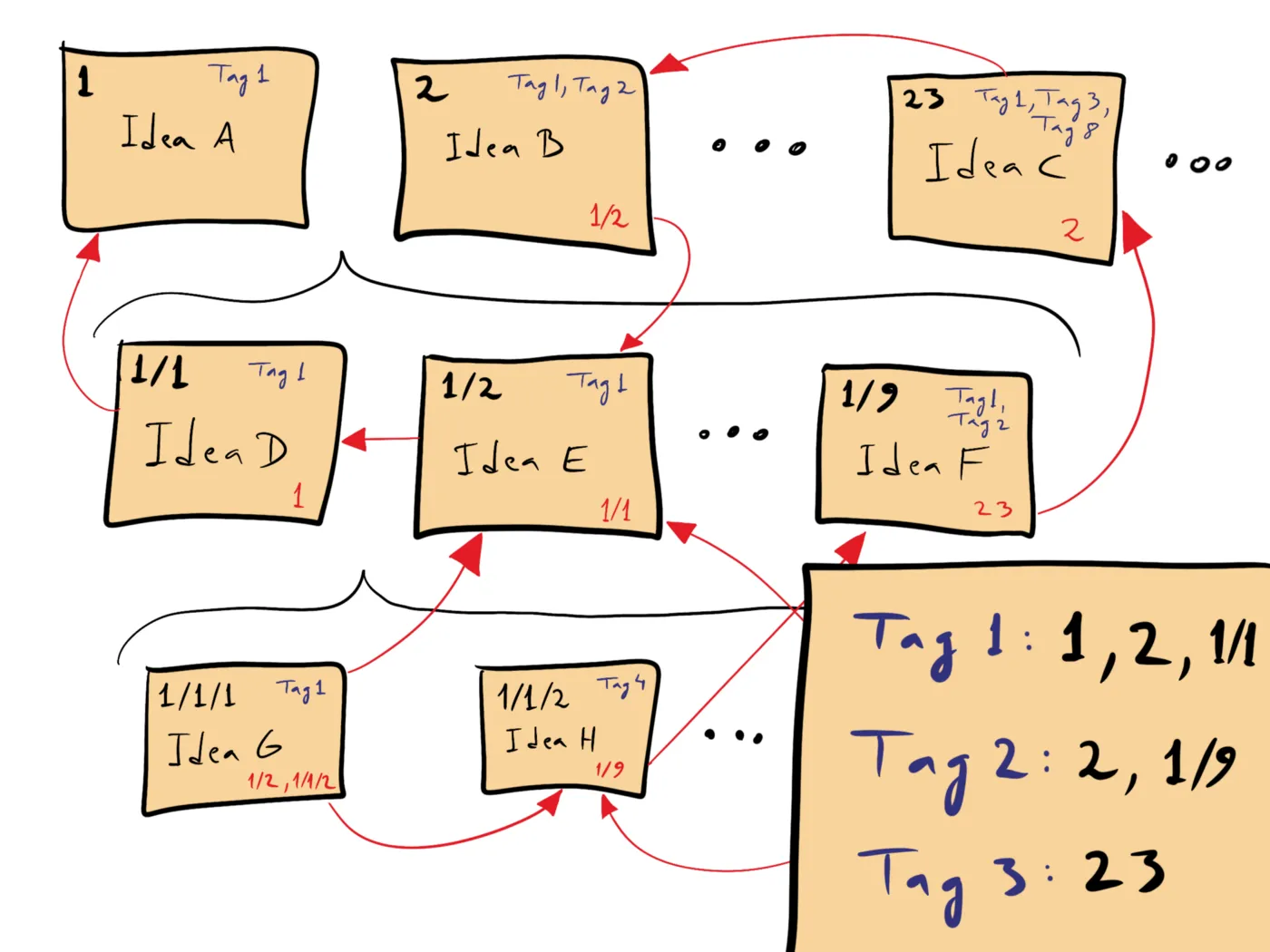
Readers should be familiar with the Zettelkasten method. If you are not, you can read my previous articles for a better understanding.
🤖 Large Language Models and Analogy
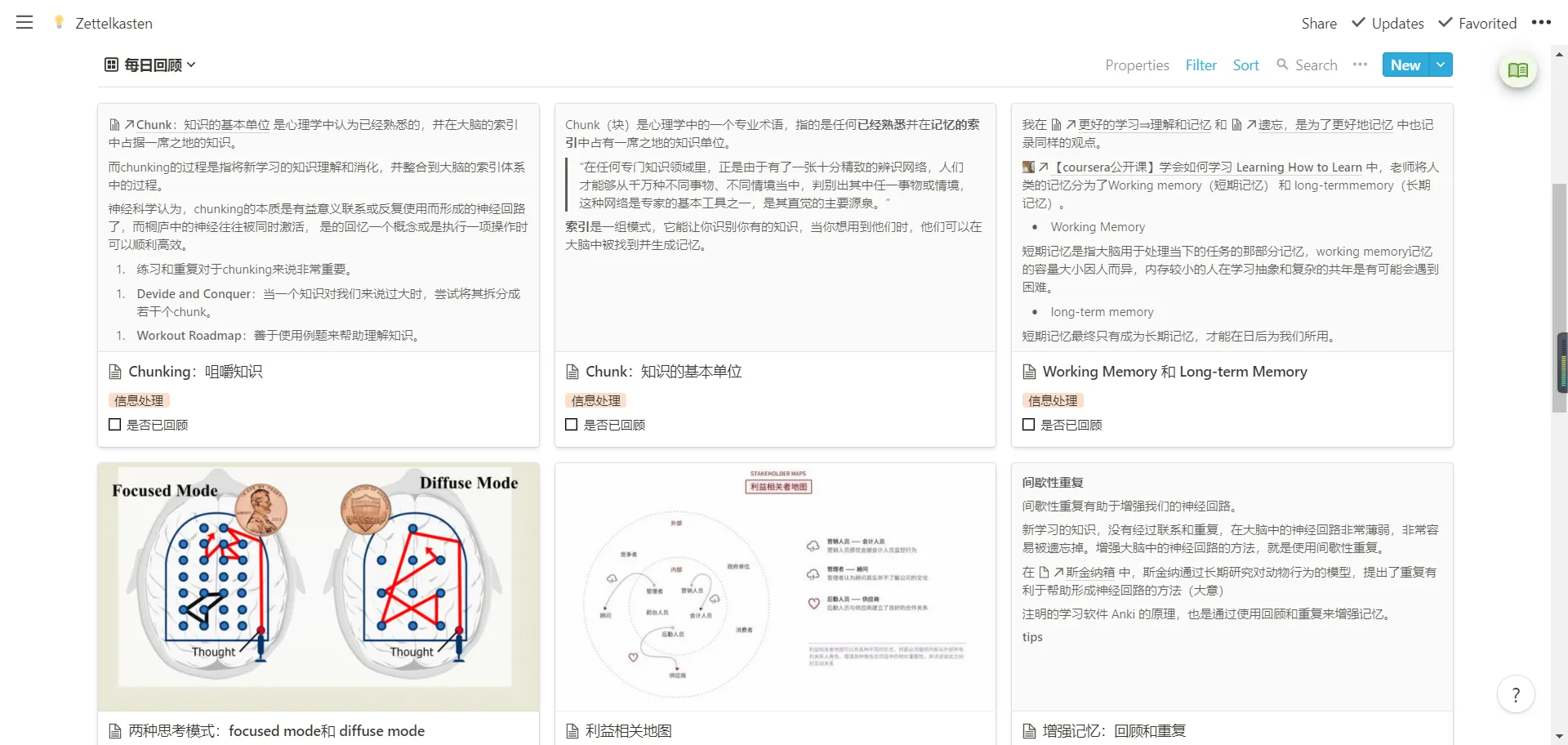
Through 4 years of practice, I have been enjoying the benefits of the Zettelkasten method as a thinking tool. However, in the Zettelkasten method, the process of discovering connections between knowledge cards when adding a new one often relies on the brain's innate way of thinking—establishing links through thought.
But with the advent of large language models, we are pleasantly surprised to find that AI can discover semantic connections. Thanks to being trained on massive amounts of data, large language models can understand the semantics of sentences, enabling semantic-based search.
📊 Embedding
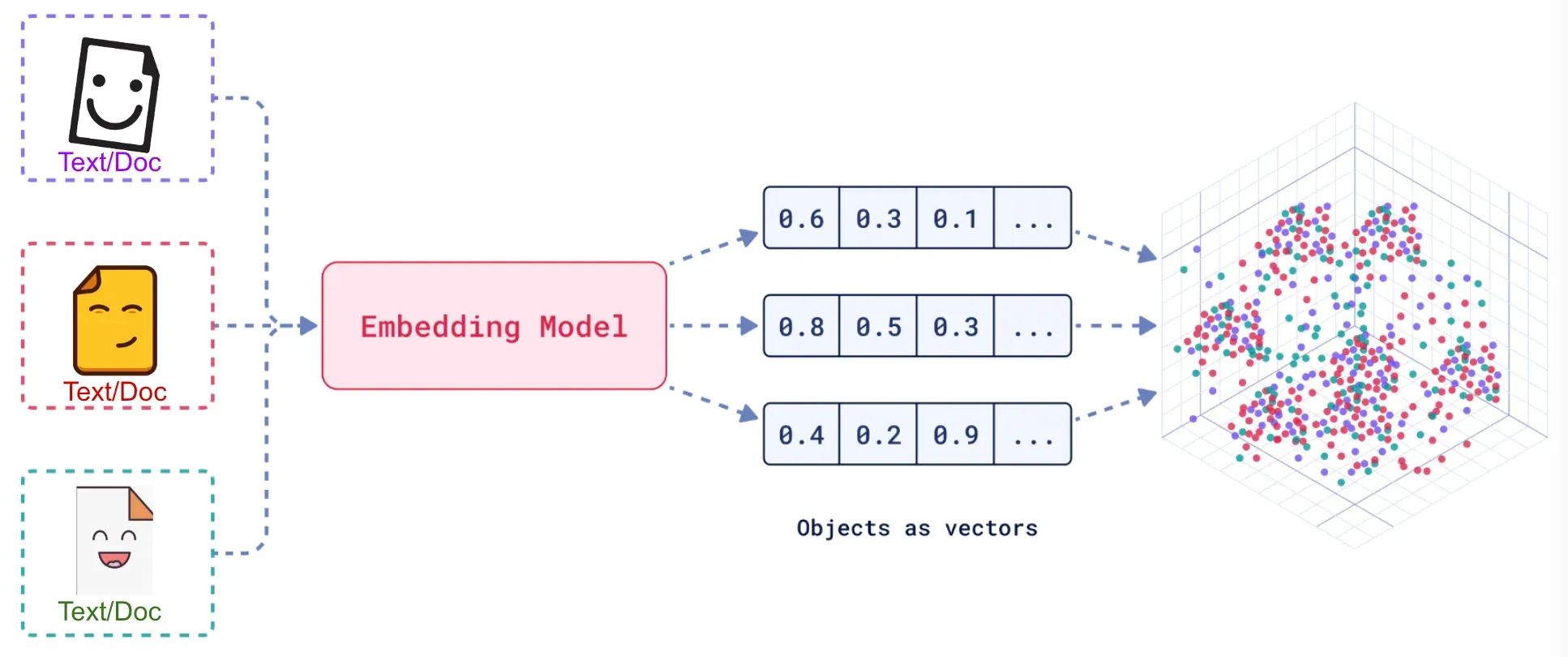
Large language models can convert text into a multi-dimensional vector, a process called "Embedding." This vector is multi-dimensional, commonly with 1024 or 2048 dimensions, representing the semantics of the text.
🔍 Semantic Search
Unlike traditional keyword search, semantic understanding can match content based on the meaning of sentences.
Traditional Keyword Search:
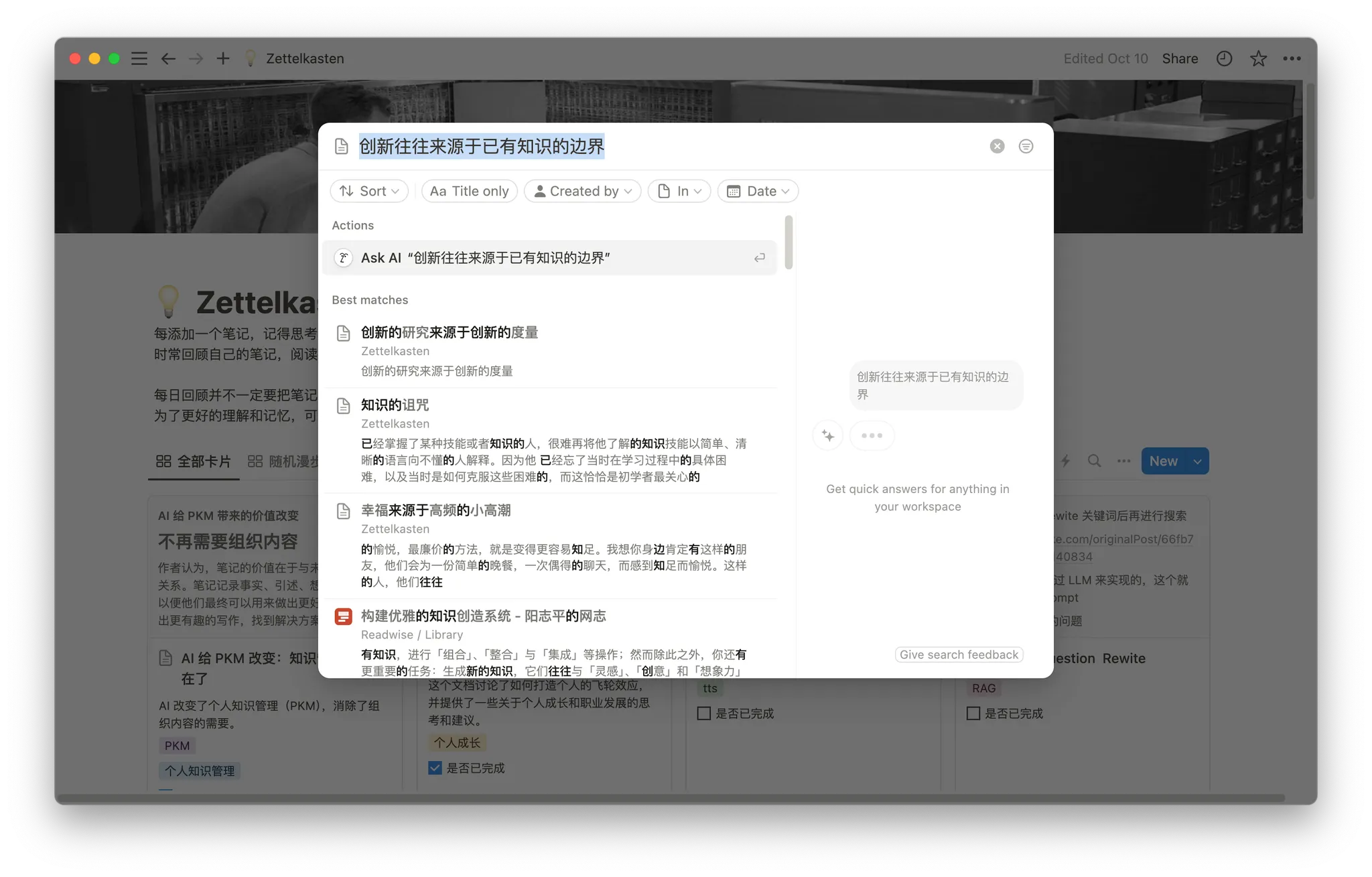
Semantic Vector Search:
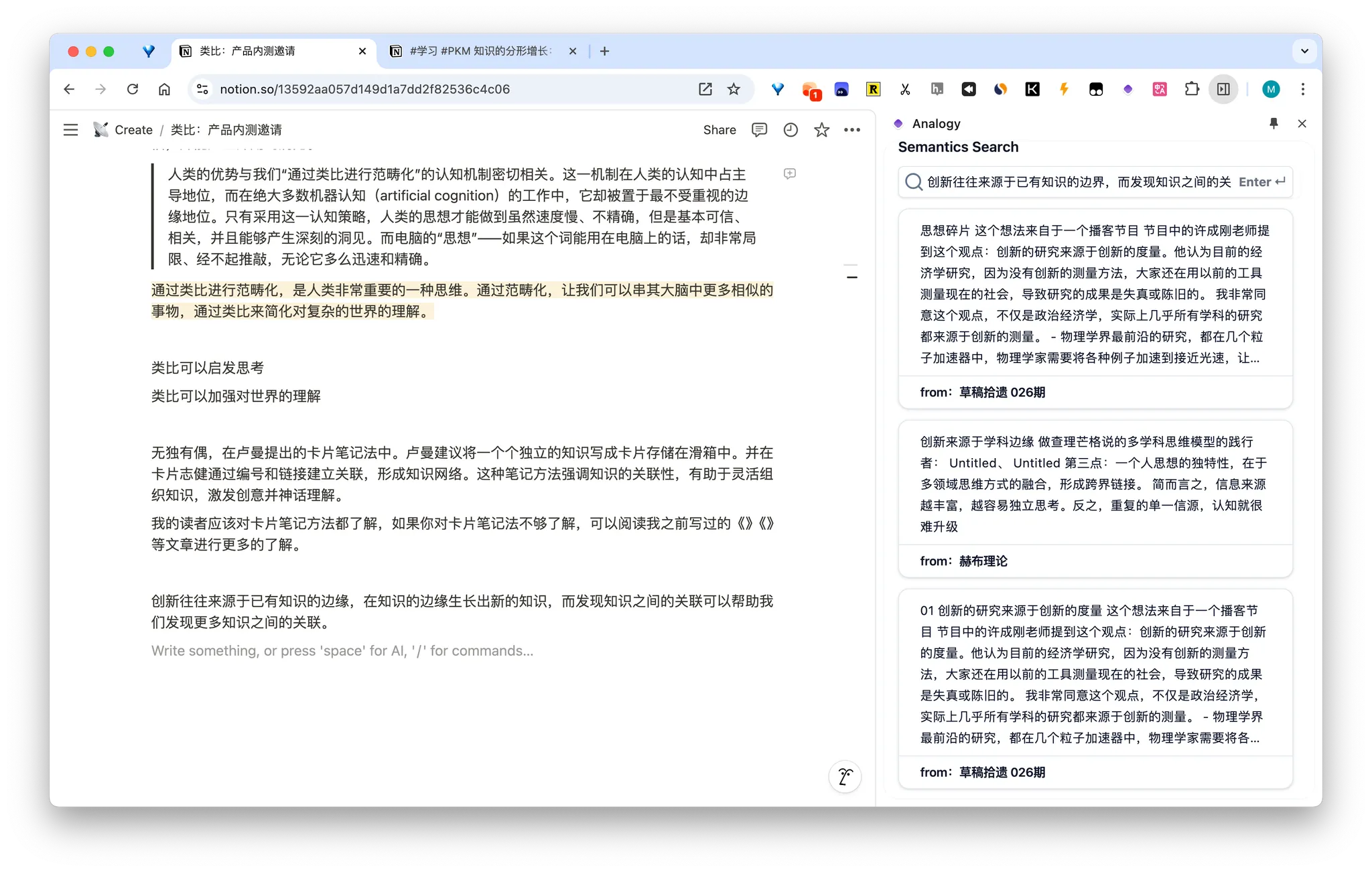
🎯 Analogy Product
This means we can optimize our knowledge management process with the help of AI. As early as April this year, I mentioned this idea to a friend about creating a product. Now, we want to make a real effort. We've created our first AI product—Analogy—and are inviting a group of users to test it.
ℹ️ Product Introduction
Analogy, as its name suggests, aims to help users discover more related information and knowledge within their knowledge base, thereby inspiring thought, enhancing memory, and deepening understanding.
The target audience for Analogy is users who are already engaged in knowledge management and have their own knowledge base.
If you haven't written a single word in your note-taking system, we recommend you start by taking notes. Specifically, Analogy is for users with over 100 notes.
🔗 Discover Connections Between Notes When Adding a New One
When viewing a note, you can see descriptions of other related notes in your knowledge base.
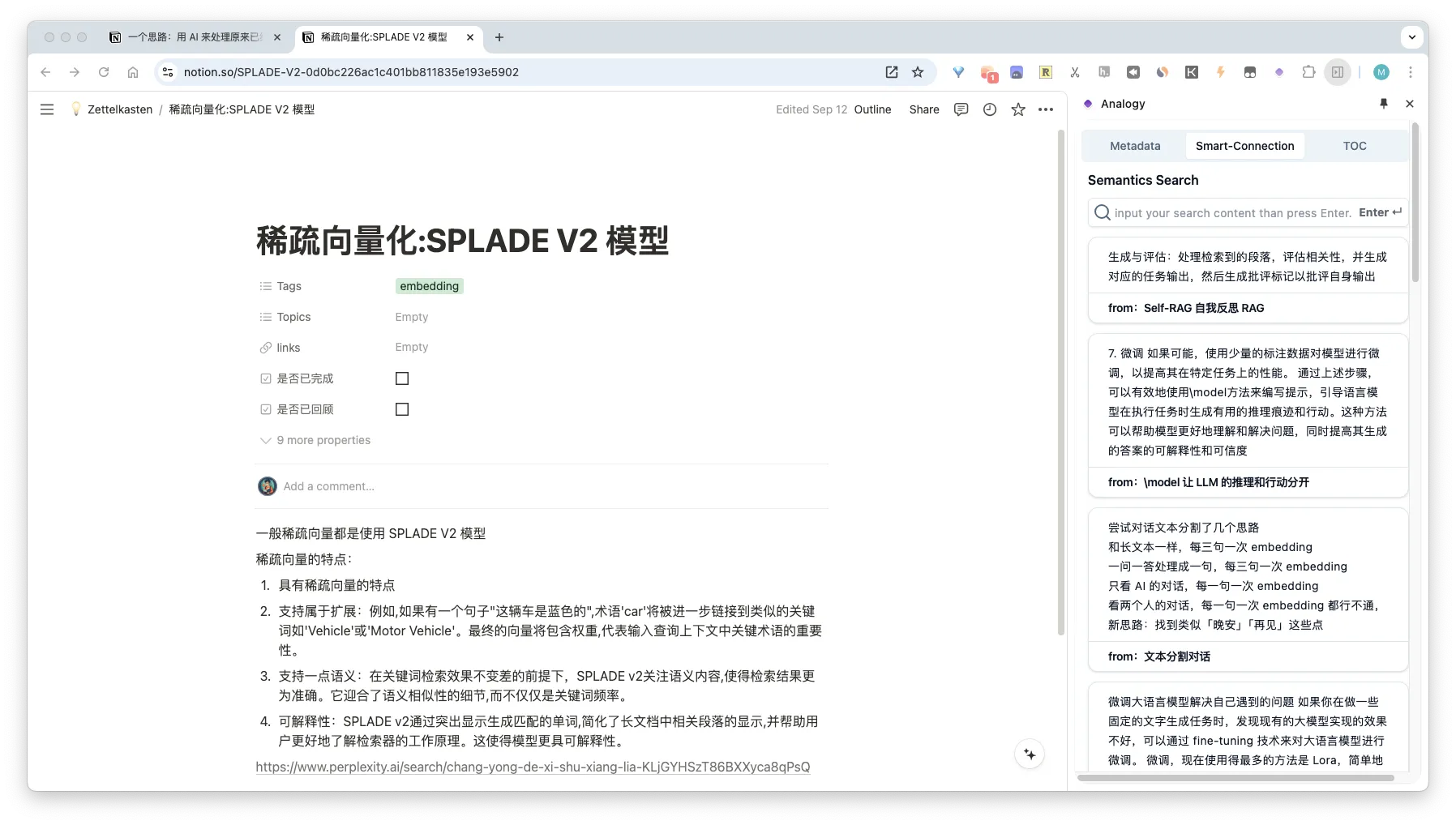
For example, while taking notes on this article, I can find related notes in my knowledge base for each point mentioned. This can spark more thoughts and help me discover more connections between my notes.
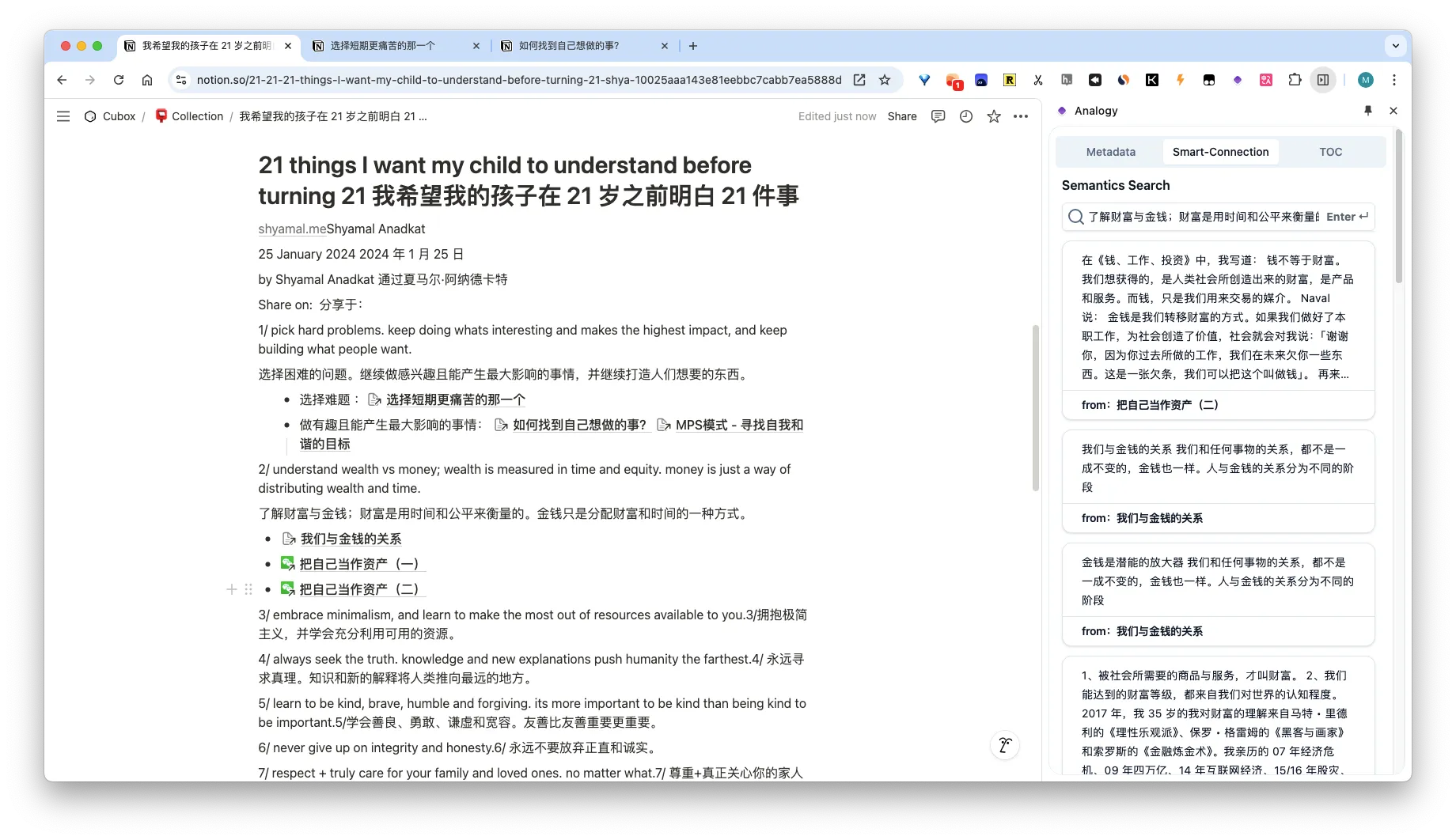
🌐 Discover Similar Thoughts While Reading
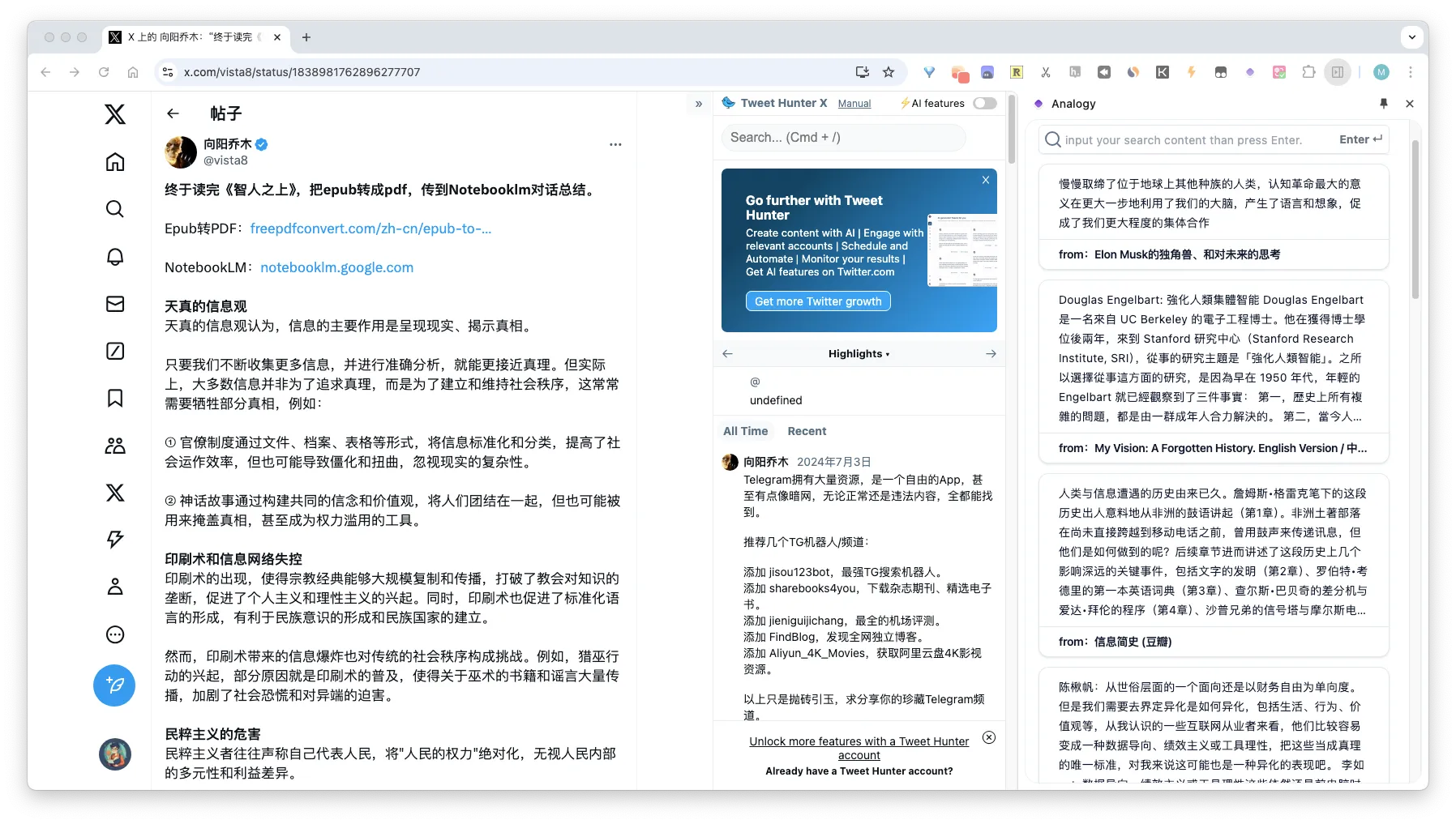
While browsing the web, you can see similar notes from your knowledge base, sparking your own thoughts.
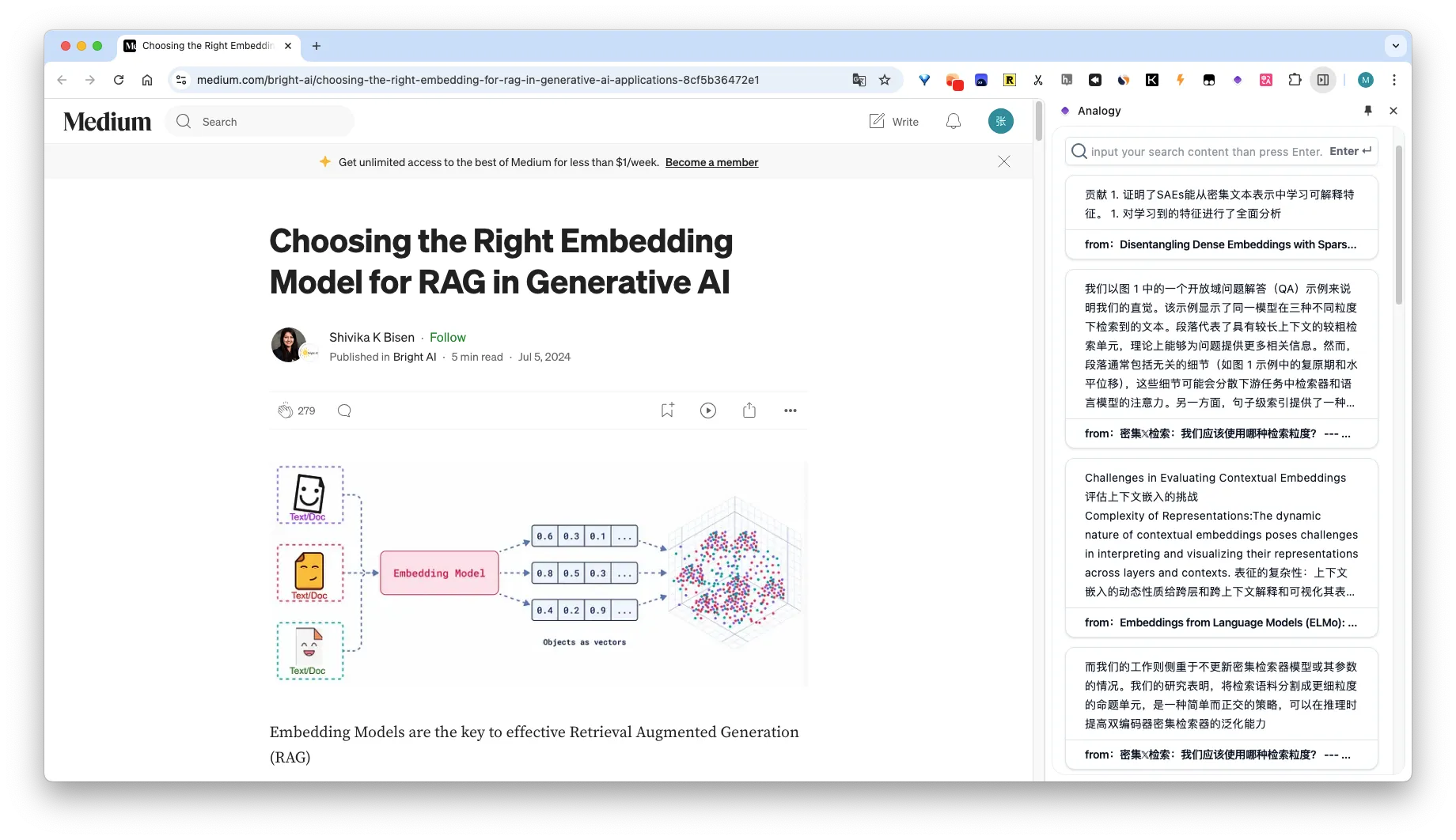
For example, while reading an article about short dramas, I was pleasantly surprised to find that Mr. Jin had already mentioned this content category back in 2019 in his "Video Wars" series of articles.

As another example, while browsing Twitter, I can also find similar thoughts of my own. For instance, this tweet discusses notes on Yuval Noah Harari's ideas about what's "Above Sapiens."
🧩 Product Form
Analogy integrates with note-taking software like Notion.
The service will be provided in the form of a Chrome browser plugin.